How Radio Connected the World · Episode 05 · 9:58
Why Radio Prague Ended Its Own Shortwave Transmissions
The end of a transmitter route was not the end of an international newsroom.
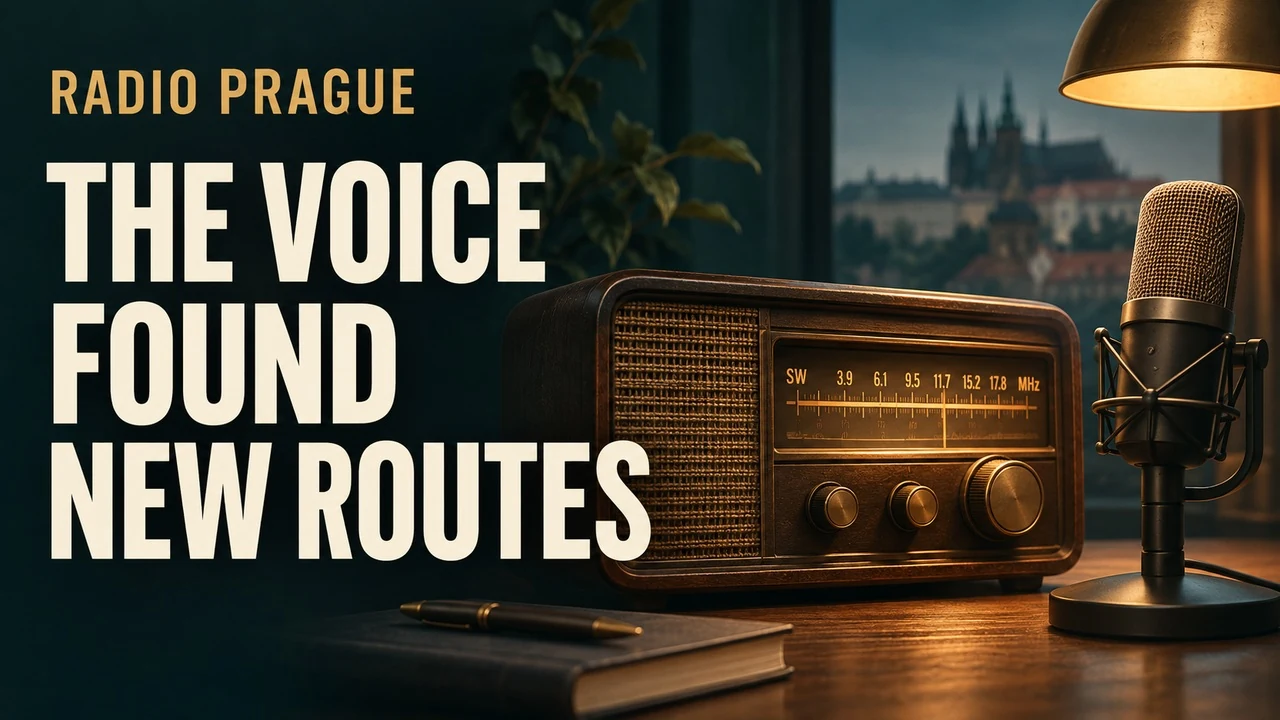 Watch on YouTube 9:58
Watch on YouTube: Why Radio Prague Ended Its Own Shortwave Transmissions
In January 2011, Radio Prague ended its own shortwave transmissions. It is tempting to tell this as a simple replacement story: old radio out, internet in. The evidence points to a more interesting distinction between the service and the routes carrying it. [1]
Follow the service, not just the signal
Radio Prague’s international broadcasts began in 1936. Poděbrady belongs to that early transmission history; later sites and equipment should not be treated as photographs of the same place. The newsroom, the studio and a distant transmitting station perform different jobs. [2]
By 2011, financial decisions helped bring the service’s own shortwave era to a close. Reporting and programmes continued through other distribution routes. Historical accounts also describe partner carriage, including WRMI in Florida. “Its own shortwave transmissions ended” is therefore more precise than “Radio Prague vanished from shortwave everywhere.” [3]
A postcard from the listener
QSL cards connect the technical story to the listener. They confirm reported reception and can also become objects of memory: a place, a station and an act of listening held in the hand. Radio Prague’s own QSL series provide examples of that visual tradition. [4]
The film keeps some postcard borders visible deliberately. What once looked like a frame to crop away is part of the object’s meaning.
A useful distinction
Radio Prague and Radio Free Europe/Radio Liberty are separate organisations. This episode follows the international service that began broadcasting from Czechoslovakia in 1936, not RFE/RL’s later headquarters in Prague.
Sources and context
These are our summaries of the sources and their role in this article. Follow the numbered markers above to find the relevant note.
Radio Prague International - Ending an era: Radio Prague signs off on shortwave
Radio Prague’s farewell presentation explains the end of its own shortwave transmissions in the context of budget cuts and continued distribution by other means. We use it to keep the service separate from one transmission route. It is the broadcaster speaking about its own change, not a general verdict on shortwave worldwide. The distinction matters because programmes, staff and audiences did not simply vanish with a transmitter schedule.
Radio Prague International - The birth of the international service
This history describes the political and technical setting in which Czechoslovakia developed an international shortwave service, including Poděbrady. We use it to locate the early broadcasts and distinguish the transmission centre from later facilities. It is a retrospective account by the broadcaster. Early plans and photographs should remain tied to their period rather than become a timeless picture of every Radio Prague installation.
Radio Prague International - Radio Prague 2011–2016
The broadcaster’s account of 2011–2016 describes budget pressures, staffing and a growing emphasis on online distribution after its own shortwave transmissions ended. We use it to follow continuity and change in the service. Its figures belong to the years covered by the page, not to the present. Distribution through partners also needs to be distinguished from the broadcaster operating its own transmission facilities.
Radio Prague International - Radio Prague issues new series of QSL cards for 2007
This interview explains why Radio Prague sent QSL cards in return for reception reports and describes the visual theme of its 2007 series. We use it to connect a technical report of reception with a designed object kept by listeners. The account documents one broadcaster’s practice in a particular year. A card is evidence of an exchange with a listener, not a measurement of the total audience or an unrestricted image licence.
Images and further reading
The poster is an illustration, not archival evidence. Sources & Methods explains our use of photographs, diagrams and reconstruction, including poster credits. The sources above support this companion article; they are not a complete inventory of every image in the film.
Continue with Why shortwave still matters, explore the Glossary, or return to all six episodes.